


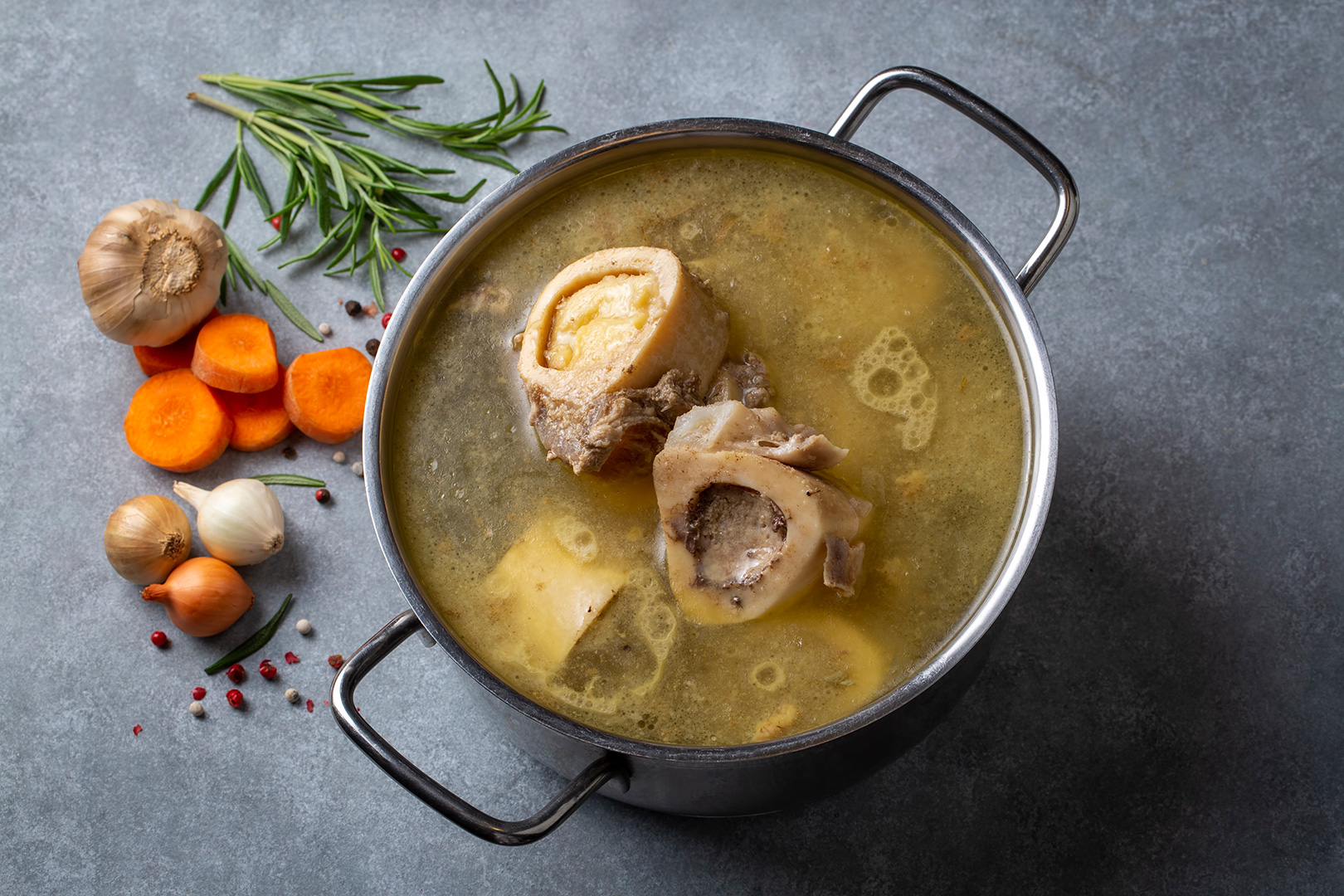
Beef bone broth might seem like a wellness trend, but this humble stock has been nourishing folks since the earliest days. It’s an ancient staple that was recognized in healing, reflecting an early understanding of food as medicine.
Long before supplements and protein powders, our ancestors slow cooked bones to extract every bit of nourishment from their food. Hunter-gatherers practiced a no-waste approach to life, including simmering bones, marrow, and connective tissue to create a sustaining broth.
Today, there are declarations supporting gut health, joint health, muscle recovery, hydration, and other benefits, but let’s take a look at the science of beef bone broth.
How bone broth is different from stock
Sometimes used interchangeably, broth, stock, and bone broth differ by cooking time and ingredients. Here’s how they compare:
- Broth: Simmered meat, vegetables, herbs, and sometimes bones for up to 2 hours.
- Stock: Simmered bones (often with some meat attached) and vegetables for 4–6 hours.
- Bone broth: Simmered roasted bones (often with vegetables) for up to 24 hours.
The longer simmering time allows for more breakdown of collagen and connective tissue, making beef bone broth more nutrient- and protein-dense. When refrigerated, high-quality bone broth develops a gel-like texture — a sign of collagen extraction. [1]
The mass production of convenient canned and powdered broths do not contain the quality or nutritional value of a true beef bone broth.
How nutritious is bone broth?
Not all bone broths are created equal. Nutrient contents are influenced by recipes and preparation methods, but the variation between batches makes exact nutrient values hard to standardize. The slow-cooking process of bone broth typically extracts maximum nutrients, including:
- Collagen and gelatin
- Protein
- Amino acids like glycine and arginine
- Calcium
- Magnesium
- Phosphorus
- Potassium
- Small amounts of iron
Protein intake supports muscle maintenance, recovery, and overall health — especially as people age. Beef bone broth can contain approximately 8–10 grams of protein per cup. [2]
Collagen is the most abundant protein in the body and supports skin, bones, joints, and connective tissues. Bone broth contains collagen-derived gelatin, though more research is needed to determine if consuming collagen directly impacts the body’s collagen production. [1,3]
Amino acids such as glycine and arginine, found in collagen, may have anti-inflammatory properties. [3]
Bone broth contains small amounts of calcium, magnesium, phosphorus, and other minerals that support bone health. However, it should not be considered a primary source of these nutrients. [2,3]
Grass-Fed Bone Broth: Is It Better?
The short answer, yes. Grass-fed beef contains more beneficial omega-3 fats and has a healthier fat composition than grain-fed beef. Some other notable, beneficial differences include:
- Higher polyunsaturated fatty acids (PUFAs)
- Higher amounts of two key omega-3 fatty acid metabolites (EPA & DHA)
- Better omega-6 to omega-3 ratio
- Higher Conjugated Linoleic Acid (CLA)
- Lower Triacylglycerol (TAGs)
When compared with grain-fed, grass-fed beef is generally higher in total nutrients, phytonutrients, antioxidants, key fatty acids, vitamins, minerals, proteins, and amino acids. [4] Choosing grass-fed beef for bone broth may offer a nutritional boost, especially for those focused on anti-inflammatory, whole-food nutrition.
Consuming beef bone broths
There are a few things to consider when purchasing or producing bone broth. Elevated metals or lead levels may be present from bone simmering over an extended period. A limit of one cup (8 ounces) per day is recommended.
Be aware that many store-bought broths contain high sodium levels and make your selection carefully. [1] And as with any food, make sure you follow proper preparation and storage methods.
Simple Recipe for Roasted Beef Bone Broth
Homemade broth allows better control over ingredients and added sodium. Bone broth is as simple as bones and water, simmered for hours to extract nutrients and collagen. Optionally, roasting the bones, adding vegetables and herbs can expand flavorings to your desired taste.
Ingredients:
- 3-5 pounds roasted, grass-fed beef soup bones (oxtail too, if you can get it)
- Water (enough to cover the bones)
- Optional: 1–2 tablespoons vinegar or apple cider vinegar
- Optional: carrots, celery, onion, thyme, peppercorns, bay leaf
Instructions:
- Dry bones with a paper towel, season with salt, and arrange in a shallow roasting pan. Roast bones, uncovered, in a 400° oven for 30-45 minutes.
- Add bones and any drippings released during roasting to a large, heavy stock pot.
- Add cold water until bones are covered.
- Add any optional ingredients, as desired.
- Bring to a boil, then reduce to a high simmer.
- Simmer for at least 6 hours, up to 24 hours.
- Strain with fine-mesh sieve and season with salt & pepper to taste. Discard bones and solids.
- Let cool. Remove any solidified fat, then store in the refrigerator for 5-7 days, or freezer for up to one year.
Good and better
So if beef bone broth is good, grass-fed beef bone broth is better. It’s not a cure-all or a substitute for a balanced diet, but this time-honored whole food provides protein-rich nourishment in every serving. And when made from cattle raised the way nature intended, it’s even better.
- - -
REFERENCES
- Wohlford, L. “Is Bone Broth Good for You?” The University of Texas MD Anderson Cancer Center.
- Hendley, J. “Savoring the Benefits of Bone Broth: Worth a Taste?” Harvard Health Publishing.
- WebMD Editorial Contributor. “Bone Broth: What It Does to Your Body.”
- Williams, A. “Nutritional Comparisons Between Grass-Fed Beef and Conventional Grain-Fed Beef” Understanding Ag

